
Network Security Built for SMBs: Managed Cybersecurity That Keeps Your Business Running

Network security for small and mid-sized businesses combines technology, policies, and managed services to protect your infrastructure, data, and people — while keeping systems available for day-to-day work. Managed cybersecurity gives continuous protection by layering preventative controls, detection tools, and rapid response workflows so business networks stay resilient and productive. This article explains why SMBs need strong network security, which managed services form an effective layered defense, how threat detection and secure remote access reduce downtime, and how compliance and backup strategies support recovery and auditability. You’ll find practical guidance on firewall management, endpoint protection, SIEM-style monitoring, VPN vs. Zero Trust options, and backup choices that match common SMB RTO/RPO goals. We use current terms—Zero Trust, EDR, SIEM, DLP—and tie controls to business outcomes so IT leaders can prioritize investments that cut risk and keep the lights on.

Why Do Small and Mid-Sized Businesses Need Robust Network Security?

Good network security lowers the chance and impact of cyber incidents by enforcing controls at the edge, on endpoints, and across the core network — protecting confidentiality, integrity, and availability for daily operations. SMBs are attractive targets because limited staff and mixed device inventories leave gaps attackers can exploit to gain persistent access or deploy ransomware. Studies repeatedly show many breaches hit organizations without dedicated security teams, and the financial and reputational cost of downtime often far exceeds the initial ransom demand.

Data consistently shows small and medium businesses face outsized financial and reputational risk from cyberattacks.

SMB Cyber Defense: Business Threats & Challenges

U.S. small and medium businesses (SMBs) are frequent targets for cybercriminals. Alarmingly, the number of affected SMBs rises each year, contributing to billions in losses and posing broader economic risk. These attacks can cause revenue loss, damage reputations, and even force closures.

Managing Cyber Defense as a Business Threat for Small and Medium Enterprises, 2023

Investing in layered network protection reduces operational risk, supports regulatory requirements, and improves uptime for customers and staff.

This section outlines common threats and shows how prevention, detection, and recovery controls cut disruption by shortening detection windows and speeding restoration.

What Are the Common Cyber Threats Facing SMBs Today?

Phishing and social engineering remain the most common initial access methods — targeted emails or messages trick employees into revealing credentials or running malware, and these incidents often lead to deeper compromises. Ransomware and extortion encrypt critical systems or threaten data release, directly disrupting operations and forcing expensive recovery work when backups or segmentation are lacking.

The growing ransomware risk highlights why robust recovery plans are essential to limit downtime and data loss.

Ransomware Recovery: Limiting Downtime & Data Loss

Ransomware infects company systems and demands payment to release data or restore access. It’s one of the most serious threats across all organization types. A well-designed recovery plan is critical — it limits downtime and the amount of data lost during an incident.

Ransomware Recovery Framework, A Khanna, 2025

Insider threats and misconfigurations — overly permissive access, outdated services, or poor segmentation — enable lateral movement and data leakage. Managed services address these risks with user training, MFA, EDR, and routine vulnerability scans to shrink the attack surface and reduce time-to-detect.

These threat categories make clear the need for a coordinated prevention → detection → response → recovery model, which we cover next and map to business continuity outcomes.

How Can Network Security Solutions Prevent Business Disruptions?

The prevention → detection → response → recovery model reduces disruptions by layering controls: preventive measures cut the chance of an initial breach, detection shortens how long an attacker can operate, and response plus recovery minimize downtime and data loss. Preventive actions include patch management, strict firewall rules, and tightened access policies that stop common exploit chains. Detection tools — network monitoring, SIEM correlation, and endpoint telemetry — surface anomalies and indicators of compromise so teams can triage and contain threats quickly. Finally, incident response playbooks and tested backups restore services faster. Together, these stages lower Mean Time To Detect (MTTD) and Mean Time To Recover (MTTR), limiting financial harm and reputational damage.

Understanding this lifecycle explains why SMBs benefit from managed network security: it turns technical controls into measurable business resilience.

What Are the Core Managed Network Security Services for Small Businesses?
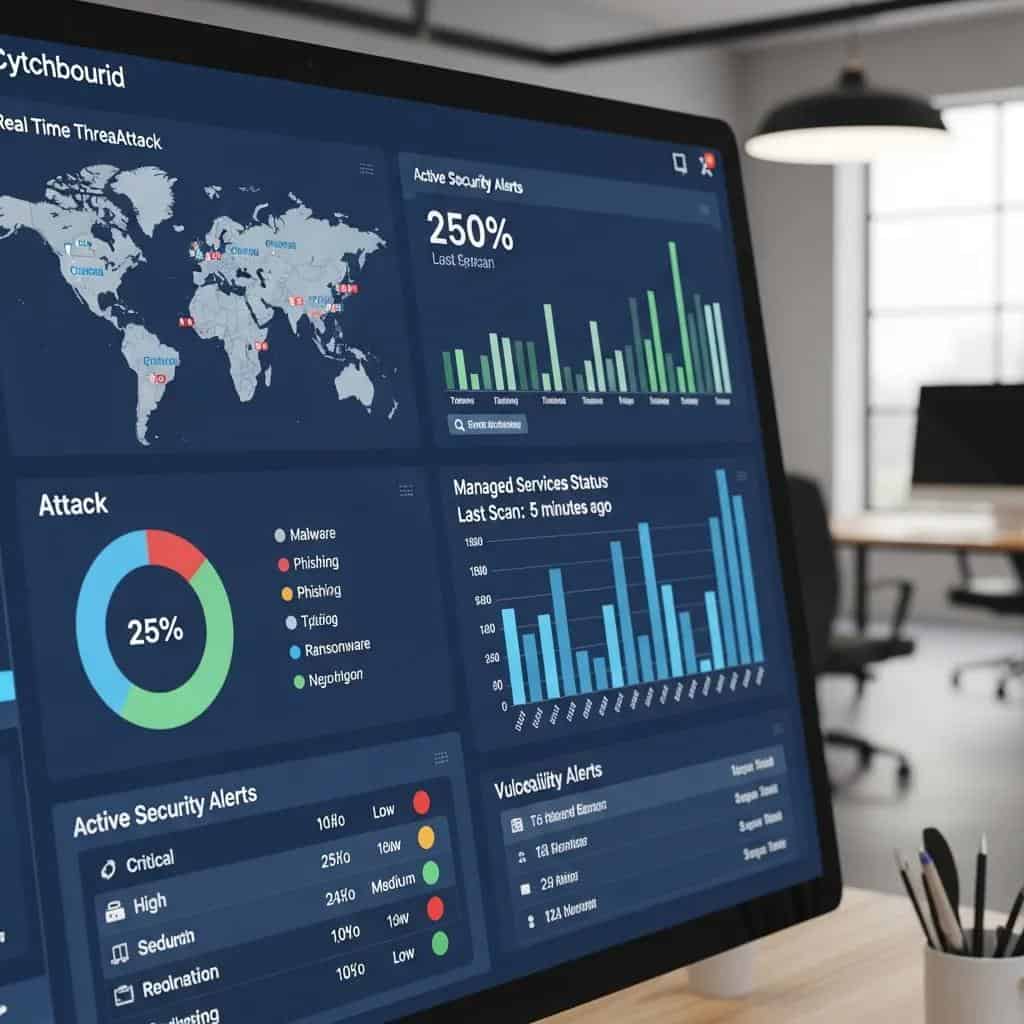
Core managed network security services deliver continuous protection and operational know-how so SMBs get enterprise-grade controls without a large in-house team. Typical managed services include firewall management for perimeter control, endpoint protection and EDR for device defense, 24/7 monitoring and SIEM-style log correlation for detection, secure remote access (VPN or ZTNA) for remote workers, and Backup-as-a-Service with tested restores for continuity. These services form a layered security model that balances prevention, detection, and recovery with SLAs and measurable outcomes like less downtime and faster containment.

This layered model — combining complementary services — builds a practical defense similar to what enterprise Security Operations Centers use, but sized for SMBs.

Layered Cyber Defense & SOC for Enterprise Security

Overlaying technical solutions onto cyber terrain follows traditional layered defense ideas. But simply stacking technologies won’t guarantee success. Cyber analysis helps defenders structure protections across each phase of an attack cycle. Coordinated defensive policies and processes, backed by technology, provide a holistic approach for a Security Operations Center (SOC) that protects modern enterprise frameworks.

Cyber security and defense for analysis and targeting, JM Couretas, 2022

Below is a concise comparison of primary managed services showing coverage, monitoring hours, and typical outcomes to help SMBs prioritize.

ServiceCoverage & MonitoringExample Outcome
Managed Firewall ServicesPerimeter policy, 24/7 logging, ongoing rule tuningFewer external intrusion attempts and blocked exploit traffic
Endpoint Protection (EDR)Device telemetry with real-time detectionFaster isolation of infected devices and reduced lateral movement
Network Threat Detection (SIEM/MSSP)Centralized log correlation and alert triageShorter MTTD and prioritized incident response
Backup-as-a-Service (BaaS)Encrypted offsite snapshots with scheduled restoresReliable recovery aligned to RTO/RPO needs

This comparison shows how bundling services delivers layered protection and measurable resilience for SMBs.

Core managed services and one-line benefits for quick reference:

  • Managed Firewall Services: Enforce traffic policies and block known threats at the network edge.
  • Endpoint Protection and EDR: Detect and remediate malware and suspicious endpoint behavior.
  • Threat Detection and SIEM Monitoring: Correlate logs to surface prioritized security incidents.
  • Secure Remote Access / VPN / ZTNA: Secure remote sessions and enforce device posture checks.
  • Backup and Business Continuity Services: Ensure recoverability and limit data loss.

These services create a practical, layered security posture that maps technical controls to business outcomes and stays operationally manageable.

After defining core services, many SMBs choose a managed provider that acts like a full-time IT department at a lower cost. Wahaya IT is a technology solutions provider in Baton Rouge, Louisiana, serving small and mid-sized businesses since 2003. For SMBs needing outsourced cybersecurity, Wahaya IT offers firewall management, endpoint protection, continuous monitoring, and backup services to reduce operational risk and support growth.

How Do Managed Firewall Services Protect Business Networks?

Managed firewall services control incoming and outgoing traffic with policies, application awareness, and intrusion prevention to stop known exploit patterns and unauthorized access. Next-Generation Firewalls (NGFW) add application control, IPS/IDS capabilities, and SSL inspection to catch threats that basic port rules miss. Ongoing rule tuning, signature updates, and logging feed threat intelligence so false positives fall and blocking becomes more accurate. The result is a hardened perimeter that shrinks attack surface and produces forensic logs for investigations and compliance.

Firewall controls complement endpoint and detection layers to create a defense-in-depth posture.

What Role Does Endpoint Protection Play in SMB Cybersecurity?

Endpoint protection combines traditional antivirus with modern Endpoint Detection and Response (EDR) telemetry to spot suspicious processes, fileless attacks, and lateral movement on laptops and servers. Patch management and device hygiene — keeping OS and applications current — close common vulnerability windows attackers use for access. Endpoint telemetry feeds centralized monitoring and SIEM correlation so alerts from devices can be prioritized and investigated quickly. Together, EDR and patching protect remote and on-site users and form the core of an endpoint-to-network defense chain.

Effective endpoint controls feed detection systems and enable automated containment to limit incident scope and speed remediation.

How Does Network Threat Detection Enhance Business Cybersecurity?

Network threat detection improves security by continuously analyzing traffic and logs to spot anomalies, correlate events across systems, and surface high-priority alerts that need human or automated response. Detection tools use signature-based, behavioral, and anomaly detection to catch known malware, novel attack patterns, and deviations from normal baselines, and they use threat feeds to add context. The detect → analyze → respond workflow shortens the attack lifecycle by enabling rapid triage and containment; paired with incident response playbooks, it turns technical alerts into business-impacting actions. Effective detection reduces dwell time and supports forensic work to prevent repeat incidents.

Key features organizations should expect from a modern detection capability include:

  • Real-time Monitoring and Correlation: Continuous log collection and cross-source correlation to spot complex attacks.
  • Threat Intelligence Integration: External feeds enrich detections with known malicious indicators.
  • Alert Prioritization and Triage: Risk-based scoring cut noise and focus teams on high-impact incidents.
  • Automated Containment: Ties into firewalls and EDR to isolate compromised assets quickly.

These features turn raw telemetry into actionable security operations and measurable reductions in MTTD.

What Are the Key Features of Effective Threat Detection Systems?

Effective detection systems provide real-time correlation, contextual enrichment, and noise reduction so security teams act on the most critical alerts first. Correlation links events from firewalls, endpoints, and servers, while threat intelligence annotates alerts with known indicators to increase confidence. Prioritization algorithms and tuned rules lower false positives, allowing smaller SMB teams to focus on real threats without alert fatigue. The outcome is a detection posture that supports fast, data-driven responses and leaves clear evidence for post-incident review.

Detection outputs must feed formal incident response plans so alerts become containment and recovery actions, which we cover next.

How Does Wahaya IT Implement Proactive Threat Response for SMBs?

Wahaya IT’s proactive response follows a practical cycle: assess → deploy → monitor → respond → refine. Assessment inventories assets and maps risk; deploy configures monitoring agents and rules; monitor establishes 24/7 log collection and escalation paths; respond runs playbook-driven containment — isolating endpoints, blocking malicious traffic, and starting recovery; refine uses post-incident reviews to update signatures and policies. Businesses can request an assessment to get a prioritized plan for detection coverage, SLAs, and recommended mitigations.

This process focuses on measurable outcomes: shorter detection windows, clear escalation paths, and continuous improvement to reduce future risk.

What Are Best Practices for Secure Remote Access and VPN in Businesses?

Secure remote access preserves productivity while limiting exposure by enforcing authentication, device posture checks, and least-privilege access instead of blanket network trust. Best practices include mandatory multi-factor authentication (MFA), device health checks before granting access, segmentation of remote sessions to limit lateral movement, and detailed logging for auditability. Where it makes sense, replace or supplement legacy VPNs with Zero Trust Network Access (ZTNA) so devices and users are authorized per-application rather than given broad network access. Together, these measures enable remote work without expanding the attack surface and support continuity during planned or unexpected disruptions.

The next two sections explain how secure remote access supports continuity and when VPNs still make sense for SMBs.

How Does Secure Remote Access Support Business Continuity?

Secure remote access supports continuity by letting employees reach essential systems from outside the office while applying the same security controls as on-site users. Proper implementations include MFA, device posture checks, and role-based access so remote sessions only touch the resources needed for each job. With reliable connectivity and tested failover procedures, secure access reduces downtime and helps teams keep customer-facing services and internal processes running. Regular drills and restore testing ensure remote access works as expected and aligns with backup and recovery plans.

These continuity practices tie directly to backup strategies and RTO/RPO objectives covered later.

What Are the Benefits of VPN Solutions for SMB Network Protection?

VPNs create encrypted tunnels that protect remote sessions from eavesdropping and are often the simplest way to secure legacy apps that lack modern authentication. But VPNs can increase lateral movement risk if not paired with segmentation and tight access controls, and they need strong credential controls and monitoring to prevent misuse. Mitigate these issues with MFA, careful split-tunneling policies, and endpoint posture checks plus logging. For many SMBs, a hybrid approach — VPN for legacy systems and ZTNA for cloud apps — balances compatibility with stronger security.

This balanced strategy helps SMBs secure remote workers while managing operational overhead and risk.

How Can Businesses Ensure Compliance Through Network Security Solutions?

Network security helps meet compliance by mapping technical controls to audit requirements such as access logging, encryption, segmentation, and retention policies. Centralized logging, strict access controls, and encryption in transit and at rest provide evidence for audits and lower the chance of reportable breaches. Managed services make compliance easier by running controls consistently, documenting configurations, and producing reports auditors can review. Below is a practical mapping that links common compliance standards to network controls and managed-service features that support them.

Standard/VerticalNetwork ControlManaged Service Feature
HIPAA (healthcare)Access controls, encryption, audit loggingRole-based access, encrypted tunnels, retention-ready logs
PCI DSS (payments/retail)Segmentation, logging, change controlNetwork segmentation, centralized log collection, configuration baselines
Data Privacy (CCPA/others)Data minimization, secure transferEncryption in transit and at rest, documented access policies

This mapping shows how managed network controls help meet regulatory expectations while easing the compliance burden on SMB teams.

Which Compliance Standards Are Relevant for SMBs?

Relevant standards depend on your industry: healthcare providers generally need HIPAA safeguards for protected health information; retailers that process cards must follow PCI DSS; businesses handling consumer data may need to consider CCPA or similar regional privacy laws. Each standard asks for overlapping controls — encryption, access management, and logging — that well-configured network security services can address. SMBs should map their data flows to identify applicable standards and prioritize controls that deliver the most regulatory and business value.

How Does Network Security Facilitate Regulatory Compliance?

Network security makes compliance demonstrable through auditable mechanisms — segmentation, retained logs, access controls, and encryption — that auditors and regulators can verify. Segmentation limits the systems in scope for regulated data, cutting audit surface and breach impact. Centralized logging with secure retention creates an evidence trail for user activity and configuration changes, while encryption protects data in motion and at rest. Managed providers can generate compliance reports and maintain baselines that document ongoing adherence and simplify audit prep.

Embedding these controls in managed SLAs reduces internal overhead and improves audit readiness.

What Are Effective Strategies for Data Backup and Business Continuity?

Effective backup and continuity strategies combine clear RTO and RPO targets, hybrid storage approaches, encryption, and regular restore testing so SMBs can recover from ransomware or failures with minimal business impact. Choose a strategy by classifying data by criticality, setting RTO/RPO aligned to operations, and ensuring backups are immutable or versioned to resist tampering. Scheduled restore tests validate procedures and reveal gaps before an incident occurs.

Below is a comparative table to help SMBs choose among on-site, cloud, and hybrid backup approaches based on RTO/RPO, encryption, and testing frequency.

Backup ApproachTypical RTO/RPOEncryption & Testing
On-site (local)Low RTO, short RPO for critical systemsFast restores, but requires offsite copies and regular testing
Cloud-onlyModerate RTO/RPO depending on bandwidth and providerStrong encryption, built-in versioning; scheduled test restores required
Hybrid (on-site + cloud)Flexible RTO/RPO tailored by data tierCombines speed with offsite resilience and scheduled tests

Hybrid strategies often balance speed and resilience well for SMBs while fitting practical testing cadences.

Why Is Data Backup Critical for Network Security?

Backups let you recover from destructive events — ransomware, accidental deletion, or corruption — by restoring trusted copies of data and configurations. Immutable backups and offsite snapshots reduce the risk an attacker can encrypt or delete all recovery points, and regular restore tests prove recovery procedures under pressure. Verifying backup integrity and isolating backups from production networks keep recovery assets safe during incidents. Backup strategy is therefore a core part of network security that ties controls to business continuity outcomes.

Secure, tested backups complete the recovery side of the prevention → detection → response → recovery lifecycle.

How Does Wahaya IT Support Business Continuity Planning?

Wahaya IT supports continuity planning through a clear process: risk assessment and data classification, encrypted backup deployment with versioning, regular restore testing, and documented playbooks aligned to RTO/RPO targets. Deliverables typically include a prioritized backup schedule, encrypted offsite snapshots, and tested-restore reports that prove recoverability within agreed timeframes. Wahaya IT emphasizes measurable outcomes — target RTOs and RPOs for business-critical systems — and continual improvement via periodic tests and plan updates. Clients receive a practical continuity plan that ties backups to incident response steps for rapid restoration after disruption.

This provider-backed approach helps SMBs turn backup capabilities into reliable, auditable continuity outcomes.

Wahaya IT positions itself as a trusted partner for SMBs looking to simplify IT, reduce costs, and improve security by acting as a full-time, fully staffed IT team at a fraction of the cost. Their managed cybersecurity solutions — including vulnerability assessments, threat detection, incident response planning, firewall and endpoint management, and backup services — are built to support growth and daily operations while lowering operational risk. Contact Wahaya IT to request an assessment and get a prioritized plan tailored to your network security and continuity needs.