
For most offices of 10 to several hundred staff, a hosted PBX is the better fit today: there’s no phone system box in your closet to maintain, calls follow staff to their computers and mobiles, and adding a person is a setting, not a hardware order. An on-premise PBX still makes sense in a few cases, which are below.
A PBX is the system that runs your extensions, call menus and transfers. The question is where it lives: on equipment in your office, or on a provider’s servers (hosted PBX, also called cloud PBX).
Talk to an advisor
Ask about your own setup.
We ask what you’re trying to accomplish and tell you what we’d look at first. It costs nothing to talk, and no price comes up on this call.
Hosted PBX vs on-premise PBX at a glance
| Hosted (cloud) PBX | On-premise PBX | |
|---|---|---|
| Where the system runs | The provider’s data centers | A box or server in your office |
| Who maintains it | The provider, plus whoever manages your phones | You, or the vendor under a service contract |
| Up-front equipment | Phones only (or none, if staff use computers and mobiles) | The PBX itself, plus phones and line cards |
| If office power or internet drops | Calls can ring mobiles or another office | Phones stop if the PBX loses power, unless it’s on battery backup |
| Adding staff or offices | A license and a phone | Capacity and licenses on the box, sometimes new hardware |
| Remote and mobile staff | Built in | Possible, with more setup |
| Phone lines | Carried over your internet connection | Copper lines or SIP trunks bought from a carrier |
Why many offices are moving off on-premise phone systems
Copper phone lines are going away. AT&T told investors in December 2024 that it plans to “essentially retire its copper network by 2029,” according to Telecompetitor. An on-premise PBX that still depends on copper lines will need new lines either way, which makes it a natural time to look at hosted.
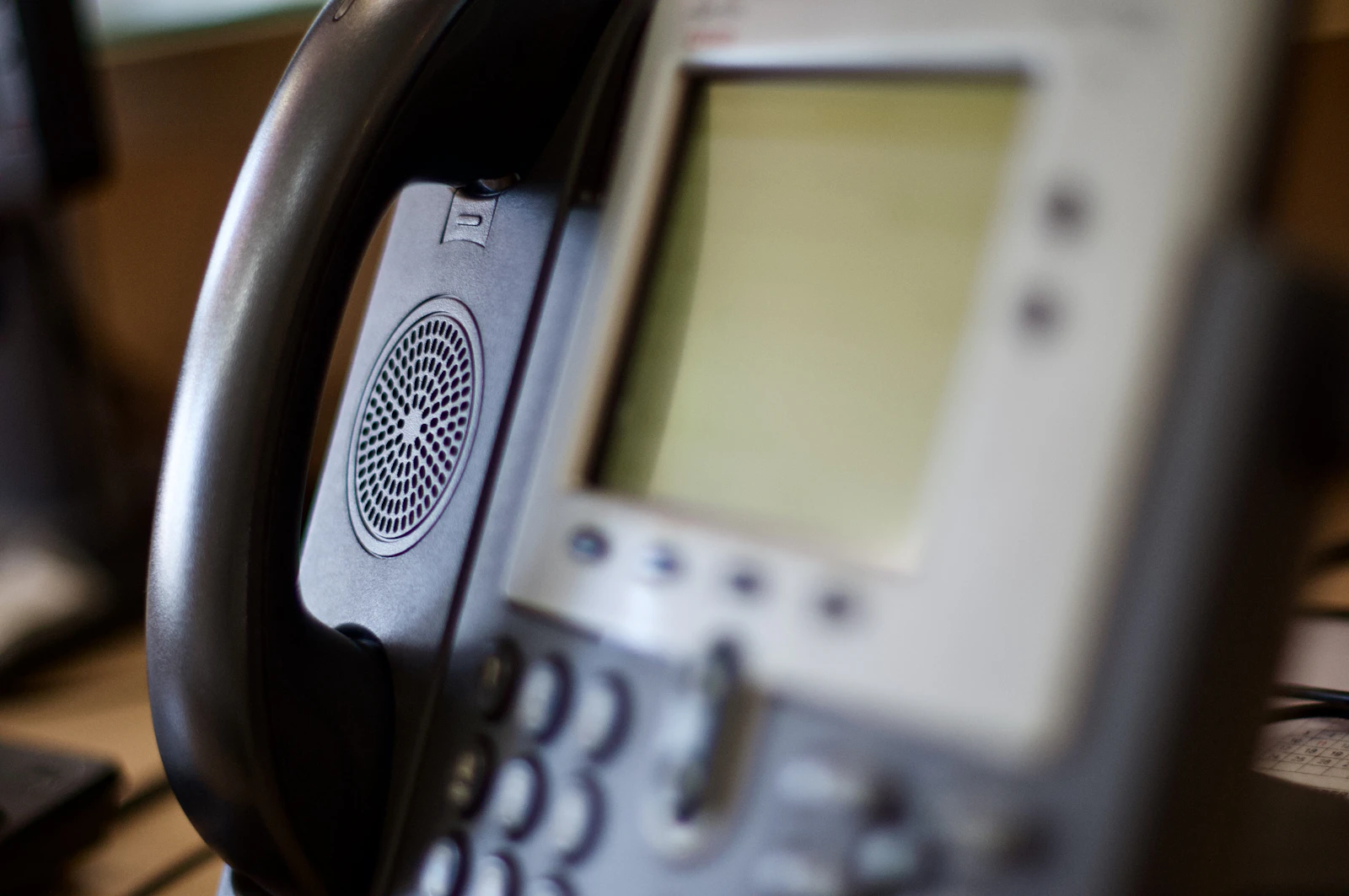
The other reason is the lease. Many offices lease a phone system for years and never own the equipment. Phone leases often renew on their own unless someone acts before a notice date in the fine print. We read phone contracts with prospects for free, so you know your dates before you decide anything.
When an on-premise PBX still makes sense
- 01You own a system that’s fully paid off, still supported by its maker, and does what you need.
- 02Your building’s internet is unreliable and you can’t add a second connection.
- 03You depend on an integration that only works with the on-premise system (some door entry, paging and older call center setups).


If none of those applies, hosted usually wins on upkeep and flexibility. If one does, a hybrid works: keep the on-premise system and connect it to the outside world with SIP trunks, which you buy from a carrier. Our plain-English guide to SIP trunks explains how that works.
What a hosted phone system depends on
A hosted PBX is only as good as the internet connection under it. Two things fix most of the risk:
- Automatic internet failover, so a second connection takes over when the first one drops. We install it for clients who need it.
- A fallback rule that sends calls to mobile phones or another office if the building goes dark.
Call quality also depends on the office network giving voice traffic priority. That’s a setting on the firewall and switches, and it’s part of setting up the system, not an extra.

What we set up
We set up two kinds of hosted phone systems: phones inside Microsoft Teams, using Microsoft’s Operator Connect, and a hosted business phone system for offices that want desk phones and a separate app. Your existing numbers move with you, and we roll out in stages after you approve the setup. Our VoIP features guide lists what’s worth turning on.
Bring your current phone contract and a rough count of who takes calls where. Book a 15-minute call and we’ll tell you whether hosted, on-premise or a mix fits your office. See our business phone systems page for what we set up and look after.
Related reading

Frequently asked questions
Is a cloud PBX the same as a hosted PBX?
Yes. Both terms mean the phone system runs on a provider’s servers instead of equipment in your office. You’ll also see it called a hosted phone system or cloud phone system.
Is hosted PBX secure?
It can be. Ask the provider about multi-factor sign-in for the admin portal, call encryption, and how they stop toll fraud (criminals running up international calls through your account). Lock down who can change call routing, the same way you would on an on-premise system.
What is an on-premise PBX?
An on-premise PBX is a phone system server you own and keep in your office. It connects your desk phones and routes calls, and it reaches the outside world through SIP trunks or older phone lines. You control it fully, and you also own the updates, security, backups and hardware replacement.
Can I keep my phone numbers if I switch to a hosted PBX?
Yes, in most cases. Moving a number to a new provider is called porting. Gather recent bills and account details for every line, including fax, alarm and door lines, and schedule the cutover for a slow day. The new provider files the request with your current carrier.


Next step
Let us handle this for you.
Office phones set up and supported by the same team that runs your IT.
- 15 minutes
Tell us which question brought you here and how your office runs.
We’ll tell you how it applies to you and what we’d look at first.
If we’re not the right fit, we’ll say so.
 15 minutes



