
Cybersecurity Services Baton Rouge - Protect Your Business with Managed IT Solutions

Baton Rouge businesses face an evolving cyber threat landscape that directly threatens revenue, customer trust, and operational continuity. This article explains why robust cybersecurity matters in 2025, the specific threats small and mid-sized businesses confront, and the practical managed IT and security measures that reduce downtime and data loss. Readers will learn concrete defenses—network security, managed detection and response, data protection and disaster recovery, compliance mapping, and security awareness training—plus how to evaluate vendor approaches like managed intelligence. The goal is to equip business leaders with actionable criteria to prioritize investments that lower risk and speed recovery. The sections that follow cover the local threat environment and statistics, a breakdown of comprehensive cybersecurity services, strategies for protecting business data, compliance and risk management tactics, and the advantages of combining managed services with AI-driven intelligence.

Why Do Baton Rouge Businesses Need Robust Cybersecurity in 2025?

Cybersecurity in Baton Rouge is fundamentally about protecting business operations, sensitive customer data, and regulatory standing from sophisticated threats that scale rapidly. Recent trends show higher targeting of small and mid-sized enterprises because attackers exploit weaker controls and predictable backups; an effective defense reduces breach impact and shortens recovery times. Local businesses face consequences ranging from lost revenue during downtime to reputational damage and potential regulatory fines when customer data is exposed. Layered defenses—network segmentation, continuous monitoring, immutable backups, and incident response preparedness—are the practical mitigation steps that shift exposure from catastrophic to manageable. Below are concise statistics and a mitigation summary to clarify the scale and nature of the problem.

  • 46% of small businesses report attempted cyberattacks in recent surveys, making targeted defense a baseline requirement.
  • Average cost per incident (including downtime and remediation) frequently reaches tens of thousands of dollars in direct losses and can multiply with data breach fallout.
  • Phishing and ransomware remain the top vectors causing initial compromise and encrypted data losses.
  • Effective mitigation combines preventive controls and managed monitoring to detect and respond before significant damage occurs.

These figures clarify the immediate needs facing Baton Rouge organizations and set the stage for selecting services that actively reduce risk and recovery time.

What Are the Latest Cyber Threats Facing Small to Mid-Sized Businesses in Baton Rouge?
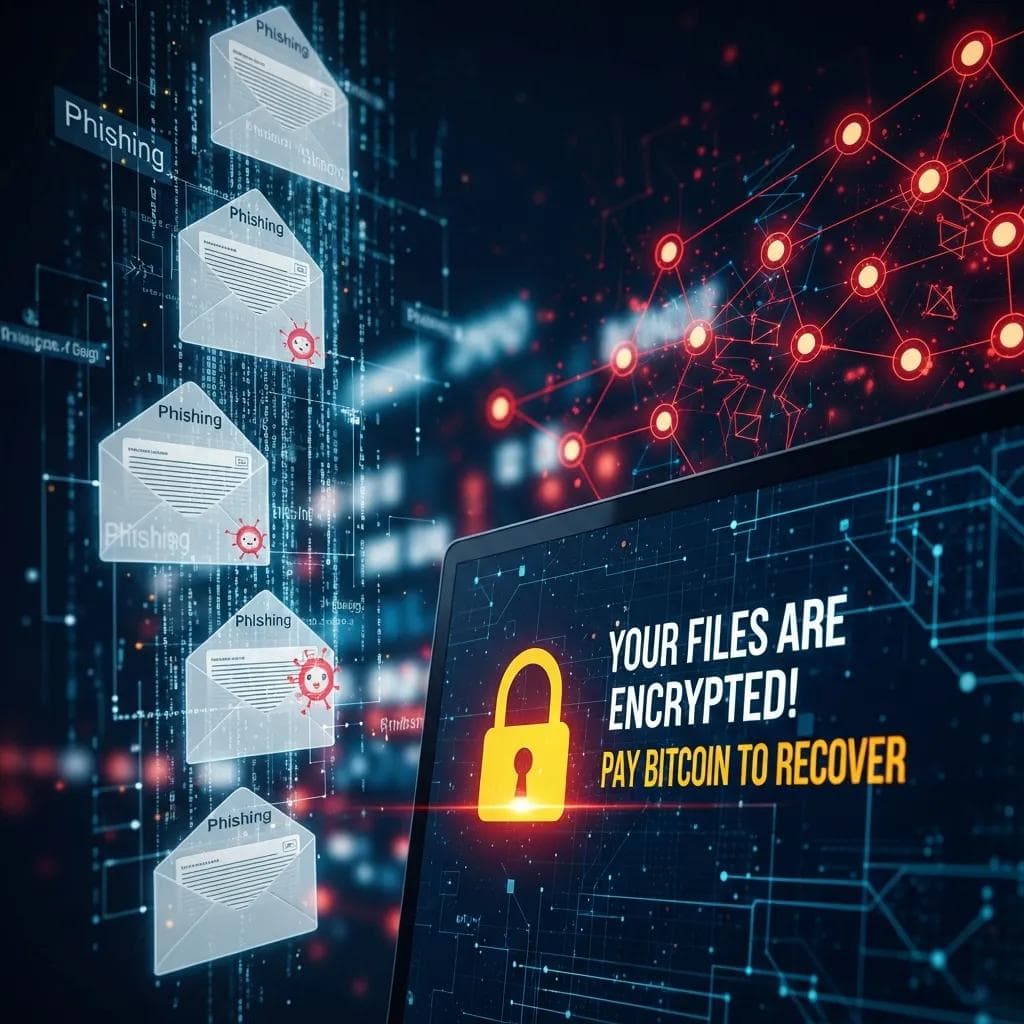
Ransomware continues to dominate the threat picture because it directly monetizes disruption, making backups and immutable storage essential defenses. Attackers often use phishing to gain initial access, then escalate privileges and deploy ransomware; AI-assisted social engineering increases success rates by crafting highly targeted messages. Supply chain compromise and third-party plugin vulnerabilities introduce risks into otherwise secure environments, while IoT devices and unsecured remote access create lateral movement paths for adversaries. Defensive recommendations include enforcing least privilege, deploying endpoint detection and response (EDR), and practicing frequent recovery drills to ensure backups and DR plans work under pressure.

These threat patterns naturally lead into how cybersecurity failures translate into operational and compliance impacts, which is central for business continuity planning.

How Does Cybersecurity Impact Business Continuity and Compliance in Baton Rouge?

A cybersecurity incident often disrupts critical services, erodes customer confidence, and can trigger regulatory scrutiny depending on the data affected, which underscores the connection between security posture and business continuity. For example, ransomware can halt operations for days or weeks if recovery objectives are unmet, while data exfiltration can create legal obligations under frameworks like HIPAA or PCI-DSS if regulated data is involved. Practical mitigation focuses on aligning Recovery Time Objectives (RTOs) and Recovery Point Objectives (RPOs) with business priorities, implementing tested disaster recovery procedures, and maintaining documentation for audit readiness. Clear contingency planning—backup validation, incident response playbooks, and communication protocols—keeps organizations resilient and reduces the chance that a single event becomes an existential crisis.

Understanding continuity implications clarifies which service categories deliver the most impact, leading into the next section that maps specific managed cybersecurity services to these risks.

What Comprehensive Cybersecurity Services Does Wahaya IT Offer in Baton Rouge?

Comprehensive cybersecurity for Baton Rouge businesses requires an integrated portfolio of managed services that combine prevention, detection, and recovery. Wahaya IT positions itself as a Managed Intelligence Provider offering managed IT, cybersecurity, and cloud services that integrate monitoring, threat intelligence, and response workflows to reduce exposure and recovery time. The core service set addresses the principal attack vectors and continuity needs that local SMBs face, and each service is designed to be co-managed so clients retain oversight while leveraging specialized expertise.

Wahaya IT core services and one-line descriptions for quick comparison:

  • Managed Cybersecurity (MDR, SOC-as-a-service): 24/7 detection and human-led response to threats.
  • Network Security: Firewalls, segmentation, and secure remote access to limit lateral movement.
  • Data Protection & DRaaS: Backups, immutable storage, and tested recovery processes for rapid restoration.
  • Threat Detection & Incident Response: SIEM-driven correlation and structured IR playbooks.
  • Compliance Support & Security Awareness Training: Gap assessments, policy templates, and phishing simulations.

The following table summarizes these services in an EAV-style format to help decision-makers compare features and benefits.

ServiceKey FeatureBusiness Benefit
Managed Detection and Response (MDR)24/7 monitoring and analyst-led responseFaster containment and reduced dwell time
Network SecurityNext-generation firewalls and segmentationLimits lateral movement and reduces blast radius
Data Protection / DRaaSImmutable backups and automated failoverShorter RTOs and reliable recovery from ransomware
Compliance & TrainingGap assessments and phishing simulationsDemonstrable audit evidence and lower insider risk

This comparison helps prioritize which services fit specific risk profiles and operational priorities since managed approaches often cost less than building equivalent in-house capabilities.

How Does Managed Cybersecurity Provide 24/7 Protection for Your Business?

Managed cybersecurity provides continuous surveillance and response by combining endpoint protection, SIEM analytics, and human analysts working in a coordinated workflow. EDR agents on endpoints detect suspicious behaviors; SIEM aggregates telemetry from network devices, servers, and cloud logs to surface correlated threats; MDR teams validate alerts and execute containment playbooks. This layered approach shortens detection-to-response timelines and reduces false positives through analyst triage and tuned rules. For many SMBs, co-managed models that pair internal staff with outsourced SOC capabilities deliver enterprise-grade protection without the overhead of a full in-house security operations center.

A practical incident flow illustrates the value of managed services: detection by EDR → alert enrichment in SIEM → analyst validation → automated containment (isolate host) → forensic triage and recovery, which leads naturally into network-level hardening measures discussed next.

What Network Security Solutions Secure Baton Rouge Businesses?

Network security secures the infrastructure that connects users, applications, and data by implementing controls like NGFWs, segmentation, secure VPNs, and zero trust principles. Firewalls and NGFWs filter traffic and enforce policy at the perimeter while micro-segmentation confines lateral movement within the internal network. Secure remote access solutions and strong authentication reduce the risk of credential compromise, and continuous network monitoring with intrusion prevention systems detects anomalous flows. A quick audit checklist helps prioritize improvements:

  • Inventory network assets and segment critical systems.
  • Enforce strong authentication for remote access.
  • Deploy NGFW with intrusion prevention and logging.
  • Monitor lateral traffic for anomalies and unauthorized connections.

Improving network posture reduces the chance that initial compromises escalate into full-scale incidents, which supports the next section on preserving business data.

How Does Wahaya IT Protect Your Business Data in Baton Rouge?
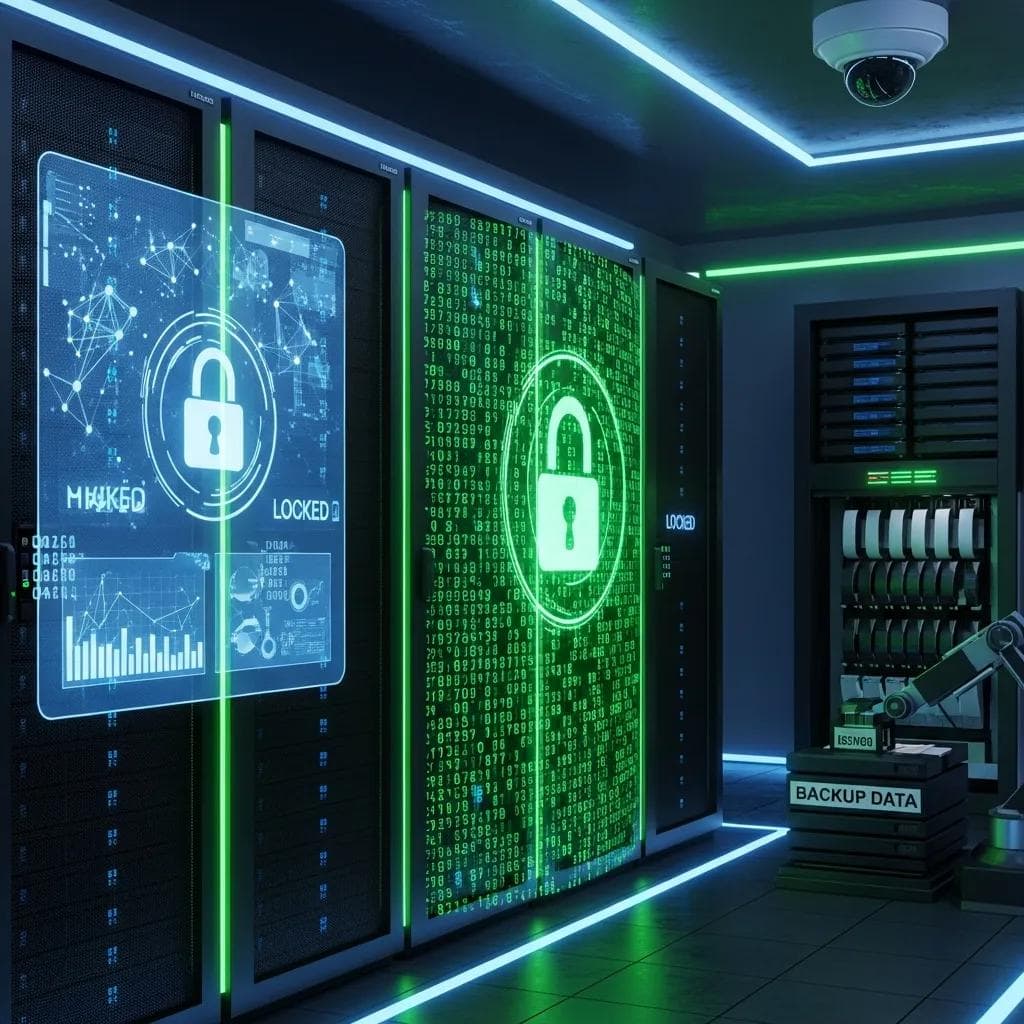
Protecting business data combines proactive encryption, robust backup strategies, and tested disaster recovery plans that align with business RTO/RPO objectives. Encryption in transit and at rest reduces the value of stolen data, while backup architectures—on-site, cloud, and immutable snapshots—ensure recoverability after ransomware or hardware failures. Disaster Recovery as a Service (DRaaS) provides orchestrated failover for critical systems, shortening downtime and restoring operations more quickly than manual rebuilds. Together, these strategies create a data protection lifecycle that prevents permanent loss and speeds business recovery.

Below is a comparison table that clarifies typical data protection options by recovery expectations and use cases.

Data Protection OptionRecovery Time Objective (RTO)Typical Use Case
On-site backups (local appliance)Hours to a dayFast restores for recent failures with physical access
Cloud backups (offsite)Hours to a dayProtection against site-level incidents and ransomware when immutable
DRaaS (orchestrated failover)Minutes to hoursCritical system failover for near-continuous operations
Immutable snapshotsMinutes to hoursRansomware resilience through tamper-proof backups

This comparison helps organizations select the right mix to meet business continuity goals and clarifies why testing and retention policies are as important as raw backup frequency.

What Are Effective Business Data Protection and Recovery Strategies?

Effective data protection uses layered, testable practices that align with business priorities and regulatory obligations. The 3-2-1 backup rule—three copies, on two different media, with one offsite—provides a baseline, while immutable snapshots prevent tampering by ransomware. Regular recovery drills validate restore procedures and ensure that RTO/RPO targets are realistic and achievable. Implementing tiered retention policies balances storage costs with operational needs, and role-based access to backups reduces the risk of accidental or malicious deletion. These practices together form a recoverable architecture that returns systems to service with minimal data loss.

Performing scheduled DR drills reveals gaps in recovery timelines and documentation, which prepares an organization to execute an efficient incident response and drives improvements back into the protection strategy.

How Does Cyber Threat Detection and Response Mitigate Risks?

Detection and response reduce risk by identifying adversary activities early and applying predefined containment playbooks to limit impact. SIEM collects and correlates logs from endpoints, network devices, and cloud services to reveal complex attack patterns that single sensors miss. MDR augments SIEM with human analysis and threat intelligence to prioritize actionable alerts and execute response steps like host isolation, credential rotation, and forensic capture. An incident response checklist—identify, contain, eradicate, recover, review—structures operations so teams can act decisively and learn from each event. Faster detection lowers dwell time, which directly reduces the scale of damage and the cost of recovery.

This detection-to-response lifecycle underscores the importance of continuous monitoring and practiced playbooks, which dovetail with compliance and training efforts addressed next.

How Does Wahaya IT Ensure Compliance and Manage Cybersecurity Risks in Baton Rouge?

Compliance and risk management involve mapping applicable regulations to controls and demonstrating evidence through assessments, policies, and monitoring. For Baton Rouge businesses handling protected health information or payment card data, adherence to frameworks like HIPAA and PCI-DSS requires documented controls, technical safeguards, and ongoing validation. Risk assessments identify gaps, remediation plans assign responsibilities, and continuous monitoring provides the evidence needed during audits. Combining technical controls with governance—policy templates, role-based access review, and incident documentation—reduces both operational risk and the potential for noncompliance penalties.

The table below maps common compliance types to typical requirements and describes how a managed provider supports those needs.

Compliance TypeCommon RequirementWahaya IT Support
HIPAAAccess controls, encryption, audit logsGap assessments, policy templates, logging & monitoring
PCI-DSSNetwork segmentation, encryption, vulnerability scansNetwork design, managed scanning, remediation guidance
General Data ProtectionData mapping, retention policiesData lifecycle consulting and backup retention planning

This mapping clarifies the practical steps organizations must take and shows how managed services provide both technical and documentation support for audit readiness.

What Compliance Services Support Baton Rouge Businesses?

Compliance services begin with a risk and gap assessment that identifies where controls fall short of regulatory baselines and produces a prioritized remediation roadmap. Deliverables commonly include audit-ready reports, policy templates, system hardening checklists, and evidence-collection plans that simplify future audits. Ongoing services may include automated log collection, scheduled vulnerability scanning, and periodic control reviews to keep posture aligned with changing requirements. A typical implementation timeline sequences assessment, remediation, validation, and continuous monitoring, ensuring organizations maintain compliance while staying operationally focused.

Implementing these services reduces audit burden and provides the documented controls auditors expect, which also supports workforce training and incident preparedness.

How Does Security Awareness Training Reduce Insider Threats?

Security awareness training reduces insider risk by changing user behavior through targeted education, phishing simulation, and role-based modules that reinforce secure practices. Regular phishing simulations measure click rates and track improvement, enabling training to focus on persistent weaknesses. Microlearning modules and periodic refresher sessions maintain awareness without overwhelming staff, while incident reporting channels make it easy to escalate suspicious emails or behavior. Measurable outcomes—reduced phishing click rates and faster reporting—demonstrate training effectiveness and feed back into policy and technical controls to harden the overall program.

These human-focused controls complement technical defenses and are essential because social engineering remains a leading initial access method for malicious actors.

What Advantages Does Wahaya IT’s Managed Intelligence Approach Bring to Baton Rouge Businesses?

A managed intelligence approach combines continuous managed services with AI-driven threat intelligence to provide predictive detection, reduced false positives, and prioritized response, delivering measurable business outcomes such as lower downtime and faster remediation. AI and machine learning augment human analysts by surfacing anomalies and correlating disparate signals across endpoints, network logs, and cloud telemetry. Local expertise ensures faster, contextual service delivery that understands regional operational patterns and regulatory expectations for Baton Rouge organizations. This hybrid model yields proactive threat hunting, automated playbooks for containment, and adaptive defenses that learn from each incident.

Below is a short list of practical advantages for business decision-makers evaluating managed intelligence offerings.

  • Predictive Detection: AI highlights anomalies likely to precede attacks, improving lead time.
  • Lower False Positives: Analyst-validated AI reduces alert fatigue and focuses remediation work.
  • Faster Recovery: Automated orchestration accelerates containment and restores operations.
  • Local Support: Regionally familiar teams provide responsive, business-context-aware service.

These benefits translate into tangible reductions in operational risk and improved uptime that support continued business growth in a competitive local market.

How Does AI Enhance Cybersecurity Services?

AI enhances cybersecurity by performing behavioral analytics, correlating signals at scale, and automating routine response tasks to speed containment. Behavioral models detect deviations from established baselines, flagging potential credential misuse or lateral movement earlier than signature-based systems. Automated playbooks execute containment steps—network isolation, user lockout, forensic captures—so human analysts can focus on complex investigations. At the same time, governance and oversight prevent overreliance on automation by validating AI outputs and tuning models to reduce bias and false positives. Continuous learning from new incidents improves detection fidelity over time.

Acknowledging AI limitations and combining machine outputs with human expertise ensures systems remain both efficient and accountable, which reinforces local trust in managed providers.

Why Choose Wahaya IT for Local Cybersecurity Expertise?

Wahaya IT offers a local presence in Baton Rouge coupled with managed intelligence capabilities that align technical controls to business priorities and compliance obligations. Their managed services integrate monitoring, network security, data protection, and compliance support into cohesive programs tailored for small and mid-sized enterprises, helping reduce recovery time and evidence gaps for audits. For organizations seeking assistance, Wahaya IT provides a consultative approach that begins with a risk assessment to quantify exposure and recommend prioritized remediation. Prospective clients can contact Wahaya IT to discuss managed IT, cybersecurity, and cloud solutions and to schedule an assessment that clarifies risk and next steps.

For direct inquiries or to arrange an assessment, Wahaya IT accepts phone contact at 225-273-1206 and maintains a local presence at 4229 North Boulevard, Baton Rouge, LA 70806. This local accessibility supports faster coordination during incidents and more tailored service delivery for Baton Rouge businesses.

  • Key local advantages: Rapid regional response, integrated managed intelligence, combined IT and security delivery.

This practical local alignment closes the loop between strategic defenses and operational readiness, and it invites businesses to take the next step toward measurable risk reduction.

  1. Assess: Begin with a risk assessment to prioritize assets and exposures.
  2. Protect: Deploy layered controls—network, endpoint, encryption, backups.
  3. Detect: Implement continuous monitoring (SIEM/MDR) to reduce dwell time.
  4. Respond: Maintain tested IR playbooks and DR procedures for rapid recovery.

These steps form a concise playbook that any Baton Rouge business can follow to improve security posture and business continuity.