
Comprehensive Managed Network Security and Support Services for Small Businesses in Baton Rouge

Small businesses in Baton Rouge face an escalating mix of cyber risk and operational complexity that makes managed network security and support essential for continuity and customer trust. This article explains what managed network security and support means, how preventative and detective controls reduce downtime, and which operational practices protect revenue and compliance. Readers will learn common threats targeting SMBs, how proactive managed services operate (including AI-augmented monitoring), practical support solutions like 24/7 monitoring and VPNs, and strategies for compliance, backup, and workforce training. Each section offers actionable steps, comparison tables, and checklists designed for IT decision-makers seeking resilient, cost-effective protections for network infrastructure. Throughout, we integrate locally relevant context and explain how a Baton Rouge managed services partner can supplement in-house teams without overshadowing the technical guidance.

Why is Network Security Essential for Small Businesses in Baton Rouge?

Network security is the coordinated set of policies, controls, and technologies that protect a company’s network infrastructure from unauthorized access, data loss, and operational disruption. Effective security works by preventing compromises through hardening and segmentation, detecting anomalies via monitoring, and enabling rapid response that limits business impact. For small businesses, the result is reduced downtime, preserved customer trust, and lower remediation costs compared with unmanaged incidents. In current market conditions, a single intrusion can cascade into lost revenue, regulatory exposure, and reputational harm if controls and response capabilities are absent.

What are the common cyber threats targeting SMBs?
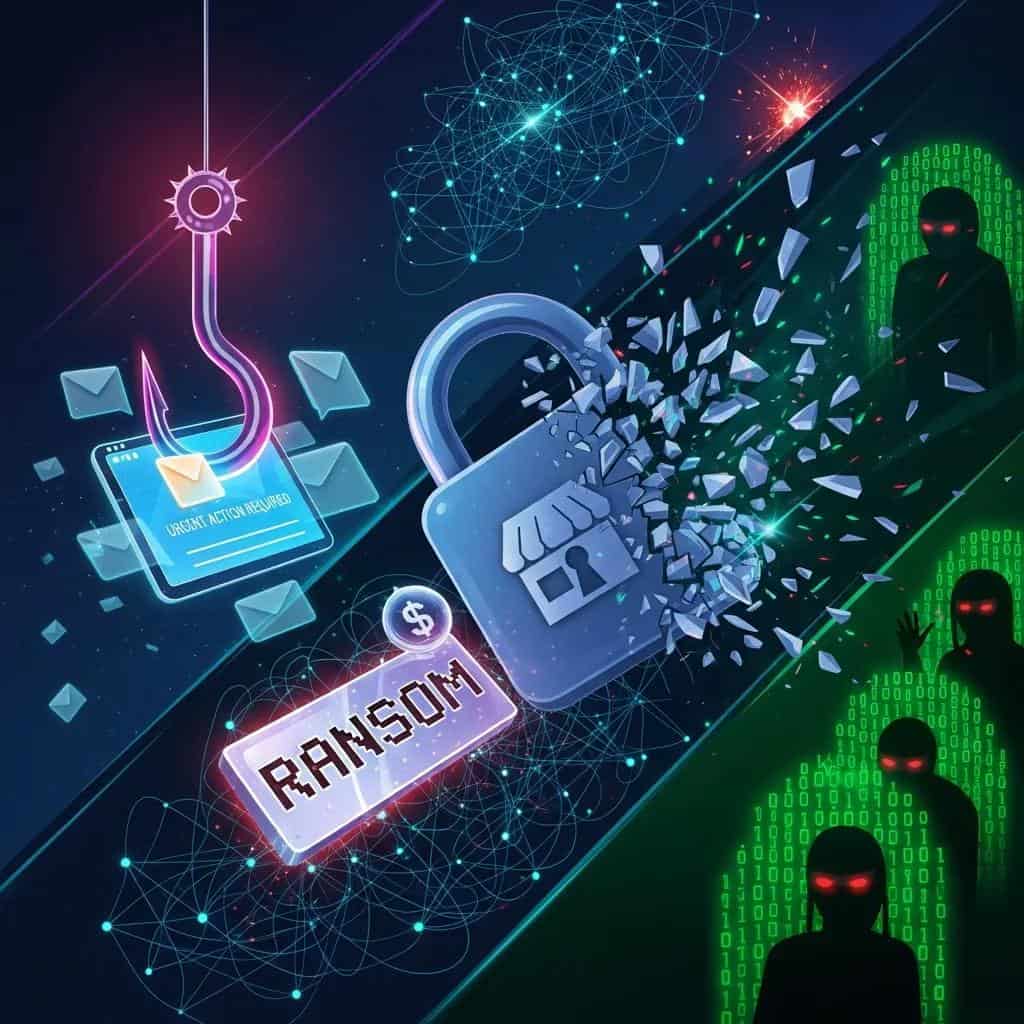
Small and mid-sized firms commonly encounter ransomware attacks that encrypt critical systems, phishing campaigns that harvest credentials, and business email compromise that diverts funds or secrets. Ransomware operators often target under-patched endpoints and unsegmented networks, while phishing exploits human vulnerability through believable lures tied to invoices or executive impersonation. Insider risks and poor patching create persistent exposure, turning common vulnerabilities into high-impact incidents for organizations without continuous monitoring. Recent studies through 2023–2024 show that SMBs face increased targeting because attackers expect weaker defenses and slower incident response.

How does network security prevent costly data breaches and downtime?

Network security prevents breaches by applying layered controls—firewalls to filter traffic, segmentation to limit lateral movement, MFA to secure accounts, and continuous monitoring to detect anomalies early. Detect-and-respond capabilities combine alerting, containment, and forensic analysis so incidents are resolved faster with less data loss and business interruption. Practical examples include isolating an infected endpoint via network segmentation to avoid a full-site outage and using backups with tested restores to recover without paying ransom. These mechanisms translate into measurable business outcomes: shorter mean time to detect, lower recovery costs, and preserved client relationships.

For Baton Rouge organizations seeking local support, Wahaya IT brings regional expertise and a proactive managed-services model that complements internal teams. A trusted partner experienced in small-to-mid market needs can perform risk assessments, implement layered protections, and provide guidance tailored to local compliance requirements. If you want an initial assessment of your network security posture and practical next steps, Wahaya IT offers managed technology services designed for SMBs that emphasize proactive monitoring and cost-effective protection.

How Does Wahaya IT Deliver Proactive Managed Network Security?

Managed network security bundles security technologies with ongoing operational oversight so protections stay current and incidents are handled quickly. Wahaya IT positions itself as a Managed Intelligence Provider that combines AI-driven detection with human analyst validation to accelerate threat identification and reduce false positives. Core services include managed firewall policy administration, endpoint protection with continuous telemetry, threat intelligence feeds that enrich alerts, and routine vulnerability assessment to close exploitable gaps. This model delivers continuous vigilance while keeping security predictable and budget-friendly for small businesses.

What is the Managed Intelligence Provider approach combining AI and managed services?

The Managed Intelligence Provider approach uses AI and machine learning to surface anomalies and prioritize alerts, while skilled technicians validate findings, tune detections, and execute remediation. AI identifies statistical outliers or behavior changes across endpoints and network flows, then hands off prioritized incidents to human analysts who investigate context, confirm impact, and apply corrective actions. This workflow—detect, prioritize, validate, remediate—reduces response time and avoids alert fatigue by focusing attention on high-risk events. The combined model yields better signal-to-noise ratios and faster containment than automated or manual models alone.

Introductory table: core security components and how they are managed

Security ComponentPrimary FunctionManagement Model
Managed FirewallTraffic filtering, IPS/IDS, policy enforcementFully managed with periodic tuning
Endpoint ProtectionAV/EDR, patch management, device controlManaged with alerting and response
Threat IntelligenceContextual enrichment of alertsContinuous feed integrated into SOC
Vulnerability ScanningIdentify configuration and patch gapsScheduled scans with remediation workflow

This table shows the critical elements of a managed security stack and clarifies which components are typically handled end-to-end by a managed provider.

How do managed firewall and endpoint protection services safeguard your network?

Managed firewall services enforce policy, block malicious traffic, and include intrusion prevention that stops known exploit patterns at the edge. Administrators update policies, tune rules to reduce false positives, and segment networks to separate sensitive systems from general access. Endpoint protection combines antivirus, endpoint detection and response (EDR), and patch management to prevent and detect compromise on devices that directly interact with users. Together, these services reduce attack surface and provide telemetry that feeds monitoring platforms for faster incident response and forensic analysis.

What Network Support Solutions Ensure Reliable Business Operations?

Operational support ensures networks remain available, performant, and secure so business processes continue without interruption. Core offerings include 24/7 network monitoring to detect faults and attacks, rapid break-fix response to restore service, lifecycle management to replace aging infrastructure proactively, and secure remote access solutions enabling distributed work. Reliable network support focuses on minimizing mean time to repair, enforcing consistent configurations, and documenting change control so outages and performance degradation are rare and recoverable.

How does 24/7 network monitoring and quick break-fix support benefit SMBs?

Continuous monitoring provides near-real-time visibility into device health, network latency, and security events so problems are identified before they escalate into outages. Rapid break-fix support—delivered remotely or onsite—reduces downtime by prioritizing remediation tasks according to business impact and SLA commitments. For SMBs, outsourced monitoring and response are typically more cost-effective than staffing a full in-house NOC, enabling predictable operating expenses and access to specialized expertise. The combination of monitoring and rapid remediation preserves productivity and customer service levels.

Introductory list: Core network support solutions and their one-line benefits

  • 24/7 Monitoring: Provides continuous visibility and early detection of faults and threats.
  • Break-Fix Response: Restores operations quickly through prioritized remediation workflows.
  • Lifecycle Management: Reduces hardware failure risk by planning refreshes and maintenance.
  • Secure Remote Access: Enables safe offsite work through VPN or zero-trust access models.

These solutions together form the operational backbone that prevents minor issues from becoming business-stopping incidents.

Introductory table: Support tiers and typical features

Support OfferingResponse Time ExpectationIncluded Features
Basic Monitoring8 business hoursAlerting, dashboard access
Standard Managed4 hoursMonitoring, patching, remote remediation
Premium Managed1 hour24/7 monitoring, priority break-fix, lifecycle planning

Summary: Choosing a support tier depends on business criticality and budget; understanding SLA expectations helps align IT investment to operational risk.

What role does secure remote access via VPN play in modern business networks?

VPNs create encrypted tunnels that protect data in transit and authenticate remote users before granting network access, making them fundamental for remote work and branch connectivity. Best practices integrate VPNs with multi-factor authentication and device posture checks to ensure only compliant devices gain access. Modern alternatives like Zero Trust Network Access (ZTNA) reduce lateral exposure by granting least-privilege access to specific applications rather than entire network segments. For many SMBs, a hybrid approach—VPN for legacy systems and ZTNA for cloud apps—balances compatibility and security.

How Can Small Businesses Achieve Cybersecurity Compliance in Baton Rouge?

Compliance means aligning technical controls, policies, and documentation with applicable regulations and contractual obligations to avoid fines and protect data subjects. For many SMBs, relevant frameworks include HIPAA for healthcare data and PCI-DSS for payment processing, each requiring specific controls like encryption, logging, and access management. A practical compliance program starts with assessment, followed by remediation to implement controls, documentation for audits, and continuous monitoring to demonstrate adherence. Achieving compliance also improves security posture beyond checklist requirements by enforcing consistent practices.

Which industry regulations affect SMBs and how does Wahaya IT assist compliance?

Applicable regulations vary by industry: healthcare providers often need HIPAA controls, merchants processing payments must meet PCI-DSS, and some service contracts demand documented security practices. Wahaya IT supports compliance by performing gap analyses, implementing technical controls such as logging and encryption, and preparing documentation and audit evidence. Deliverables can include written policies, configured logging and retention, and remediation plans that map directly to regulatory requirements. This combination of assessment, technical work, and documentation streamlines audit preparation and ongoing compliance management.

Introductory list: Core compliance steps for SMBs

  1. Assess: Conduct a gap analysis to identify missing controls and documentation.
  2. Implement: Deploy technical and administrative controls to close gaps.
  3. Document: Produce policies, procedures, and evidence to support audits.
  4. Monitor: Maintain logging and review processes to demonstrate continuous compliance.

Completing these steps converts compliance from a one-time project into a sustainable program that improves security while reducing audit friction.

What are the benefits of audit preparation and ongoing compliance management?

Proactive audit preparation reduces the chance of fines, accelerates contract approvals, and increases customer confidence by showing demonstrable controls. Ongoing compliance management improves operational maturity by standardizing processes like access reviews and change control, which in turn reduces security incidents. For many SMBs, the business benefits include competitive differentiation during procurement and reduced legal risk. Regular reviews and evidence collection also shorten audit cycles and lower the total cost of compliance over time.

What Strategies Enhance Business Continuity Through Data Backup and Disaster Recovery?

Business continuity combines backup strategies and disaster recovery planning to ensure data can be restored and operations resumed after an incident. Backup focuses on preserving copies of data (often with versioning and retention policies), while disaster recovery defines recovery time objectives (RTO) and recovery point objectives (RPO) for restoring systems and services. Effective strategies use a mix of onsite speed and offsite resilience—hybrid models provide rapid access for common restores and offsite redundancy for catastrophic events. Regular testing validates recovery processes and keeps playbooks current.

How do cloud backup solutions protect against data loss?

Cloud backups offer off-site redundancy, automated scheduling, and versioning that protect against accidental deletion, ransomware, and local disasters. Encryption in transit and at rest secures backup copies, while retention policies provide recovery points over time for granular restores. Automated backups reduce human error and ensure consistent coverage, and immutable storage options hinder tampering by attackers. Restores should be periodically tested to confirm integrity and meet RTO/RPO objectives for critical systems.

Introductory table: Backup option comparison for SMBs

Backup OptionRTO TypicalRPO TypicalBest Use Case
On-site BackupMinutes–hoursNear-zeroFast restores for local failures
Cloud BackupHours–daysMinutes–hoursOff-site resilience and versioning
Hybrid BackupMinutes–hoursMinutesBalanced speed and redundancy

This comparison clarifies trade-offs so businesses can select approaches that meet their recovery objectives.

What are best practices for disaster recovery and business continuity planning?

A robust DR plan defines critical systems, establishes RTO/RPO targets, assigns roles and responsibilities, and documents communication plans for stakeholders and customers. Regular testing—tabletop exercises and full restores—verifies that personnel understand procedures and that technical restores work within expected timelines. Updating the plan after organizational changes and post-test learnings keeps the plan actionable and reduces surprises during an actual event. Integrating backup verification, clear ownership, and scheduled testing forms the core of resilient business continuity.

How Does Security Awareness Training Strengthen Your Network Defense?

Security awareness training reduces human-driven risk by educating staff on phishing, social engineering, and safe device habits that prevent common breaches. Training programs that combine interactive modules, simulated phishing, and role-based content change behavior and measurably lower click-through and compromise rates. Effective programs tie training outcomes to metrics—such as reduced phish click rates and faster reporting—to demonstrate return on investment. Reinforcement over time builds a security-aware culture that complements technical controls for a balanced defense-in-depth strategy.

Why is employee education critical to preventing phishing and social engineering attacks?

Employees are often the first line of defense and the most targeted attack surface for credentials or access escalation, which makes training critical to reducing incident rates. Research through 2024 shows organizations that run repeated simulations and immediate feedback see measurable declines in susceptibility. Education improves reporting behaviors so suspicious emails are escalated for analysis before attackers can exploit them. Beyond preventing immediate compromise, training supports compliance requirements and helps cultivate a risk-aware workforce.

Introductory list: Effective training methods and measurement approaches

  • Simulated Phishing: Realistic exercises that identify at-risk users and target follow-up training.
  • Microlearning Modules: Short, frequent lessons that reinforce specific behaviors without overwhelming staff.
  • Live Workshops: Role-based sessions that address high-risk functions and incident response steps.
  • Metrics Reporting: Track click rates, report rates, and remediation outcomes to guide program improvements.


Summary: Combining varied delivery modes with measurement creates a continuous improvement loop that lowers human-driven risk over time.

What are effective methods for delivering security training and simulations?

Effective programs use a mix of simulated attacks, short targeted modules, and role-specific workshops scheduled throughout the year to maintain awareness and adapt to evolving threats. Repeated phishing simulations with tailored follow-up reduce repeat mistakes and build muscle memory for correct reporting actions. Reporting dashboards and executive summaries tie training outcomes to business KPIs, enabling leadership to prioritize resources where risk is greatest. Integrating training into onboarding and annual refreshers ensures new and existing staff maintain necessary competencies.

If you’re ready to translate these strategies into action, request a free network security assessment or consultation to evaluate your current posture and prioritize improvements. Wahaya IT can perform a tailored assessment, map risks to your business processes, and propose managed network protection and support options designed for small to mid-sized organizations in the Baton Rouge area. This consultative step helps leaders choose the right combination of monitoring, managed security services, compliance support, and continuity planning without over-investing in internal staffing.